
Reducing maintenance effort and downtime with non-invasive ultrasonic technology
Ultrasonic antifouling systems provide an innovative and environmentally friendly solution to prevent marine growth on ship hulls, seawater systems, and onboard sensors. By using high-frequency ultrasonic waves, these systems effectively inhibit the formation of biofouling without the need for chemicals or coatings.
Designed for continuous operation in harsh marine environments, ultrasonic antifouling technology helps maintain system performance, reduce maintenance requirements, and improve overall vessel efficiency. It supports compliance with environmental regulations while contributing to lower fuel consumption and extended service intervals.
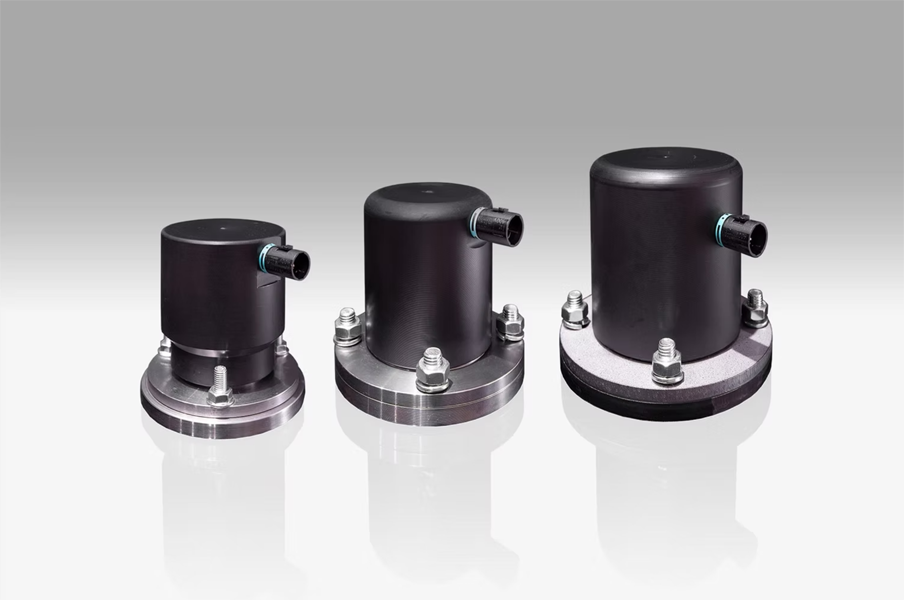
Transducers TD80-TD100-TD120
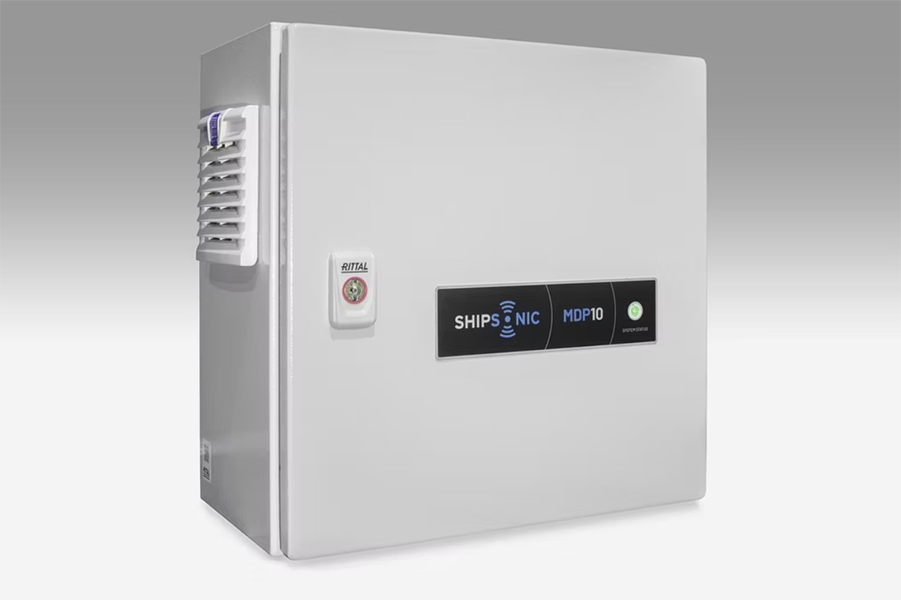
Control unit MDP10 closed
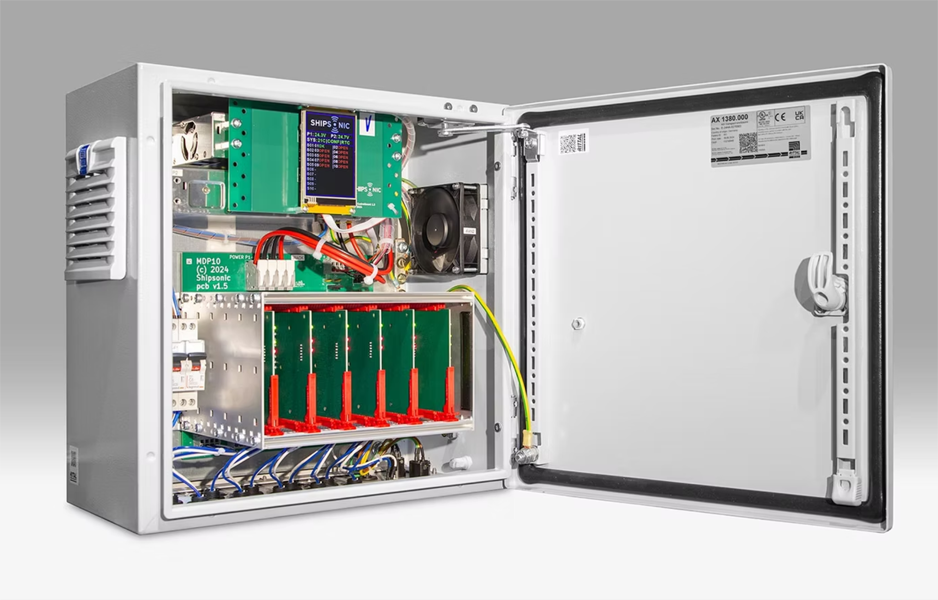
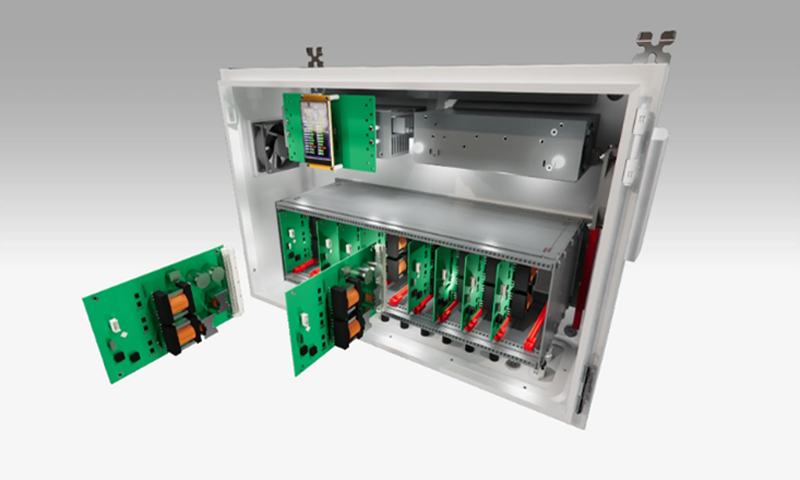
Control unit MDP10 opened
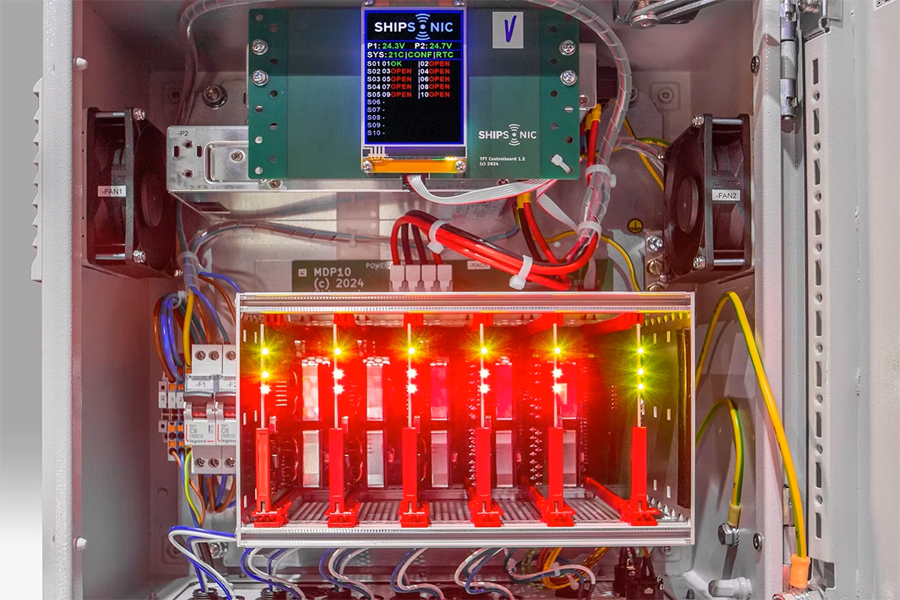
MDP10 Control unit with indicator LED’s
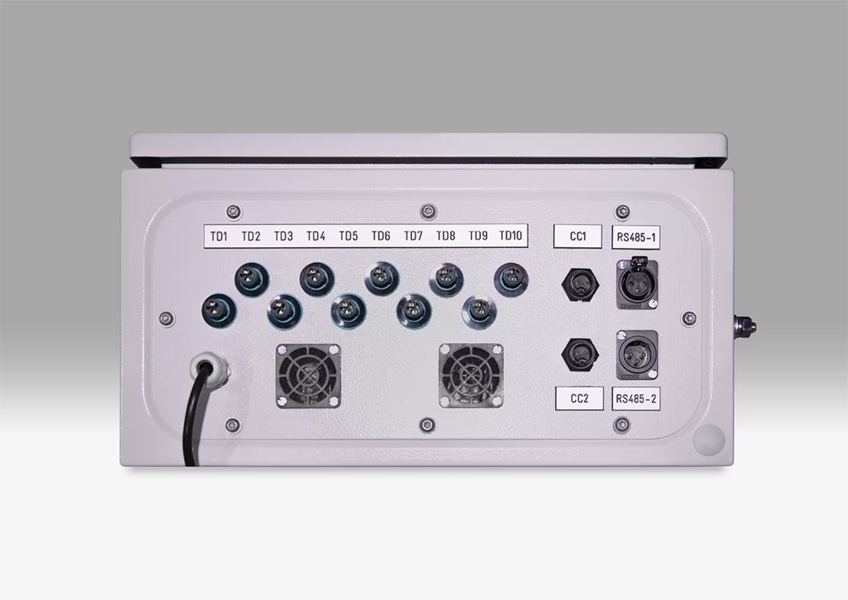
Connection sockets
Control Units (MDP Series)
The Shipsonic MDP series supports up to 20 transducers per cabinet in a modular configuration. Each channel provides up to 125 W peak power. System monitoring is available through cabinet LEDs, a TFT screen, RSn485/USB connection, and PLC-compatible.
Alarm outputs. Units include redundant power supplies, forced cooling, and configurable frequency ranges to avoid interference with other systems.
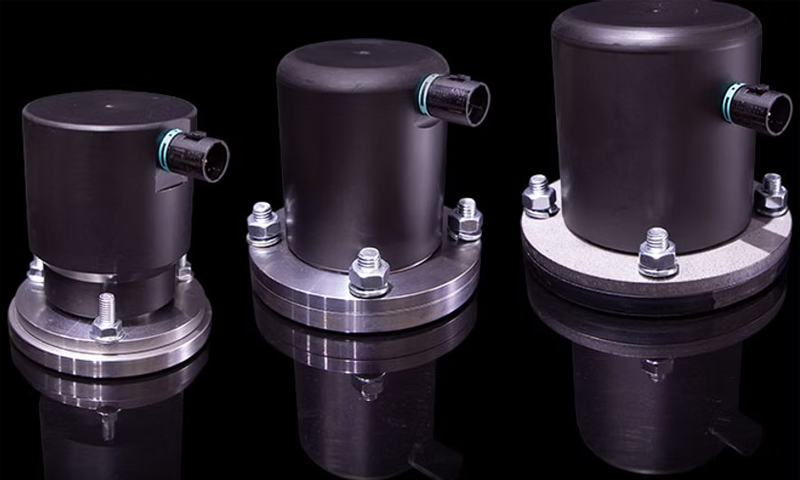
Transducers
Shipsonic’s patented welded-ring mounting system ensures strong mechanical coupling and prevents detachment under high SPL conditions. Three models (80W/100W/120W) are designed for confined spaces such as box coolers, where lower ultrasonic resonance frequency, high-power performance is essential. Transducers can be mounted on flat or curved surfaces and carry IP67/IP68 ratings.
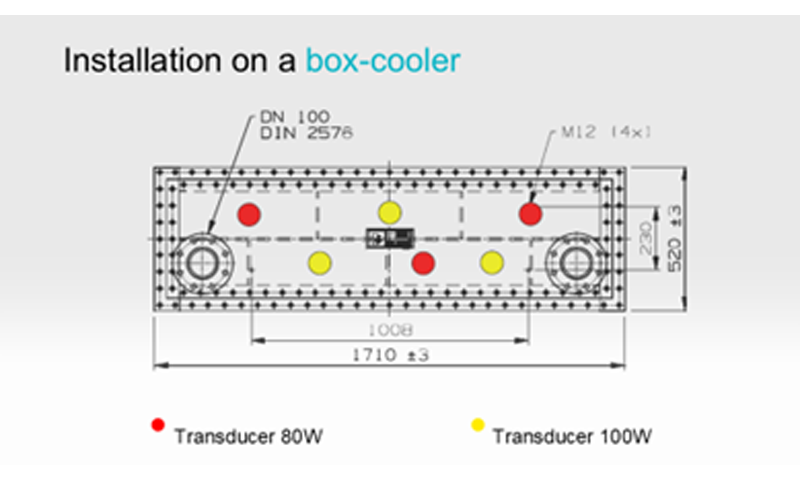
Transducer Positioning
Shipsonic provides detailed installation proposals including exact transducer locations per cooler, and control-unit configuration based on vessel layout. Using mixed transducer types improves resonance distribution and ensures optimal antifouling coverage across each structure.
How it works
Key Features
Ultrasonic antifouling operates by vibrating submerged structures at ultrasonic frequencies (18–45 kHz). This inhibits biofilm development and prevents larger fouling organisms from attaching. Shipsonic transducers are spring-mass systems (like a loud-speaker) with installation dependent resonance frequencies. Because resonance levels depend on torque and temperature, Shipsonic drives each transducer through a wide frequency sweep to ensure continuous operation at its actual resonance. This maximizes sound pressure level (SPL), the key determinant of antifouling performance.
To further increase SPL, Shipsonic installs multiple transducer types on the same structure, allowing multiple resonance peaks and stronger combined output. Despite peak powers of 80–120W, actual energy consumption is around 8 W because a transducer only draws full power at its resonance frequency.
- Industrial, robust design with high reliability in harsh engine-room environments
- High-power transducers (80W / 100W / 120W) for stronger sound pressure, with lower resonance frequency output
- Smart resonance tracking software ensures optimal performance
- Failsafe electronics engineered to run below maximum temperature thresholds
- Modular, plug-and-play system: each transducer channel is independent
- Easy at-sea maintenance with simple board replacements