

The TORXmeter® digi shaft power measurement system is the improved system for speed, torque and power measurement on ship shafts and offers extensive data analysis options
More functionality – more flexibility
ShaPoLi-compliant – class certificated
Shaft power measurement is important for ships for the following reasons:
- Efficiency and fuel consumption: Optimizes fuel consumption and reduces costs and emissions.
- Maintenance and service life: Allows early detection of wear and mechanical problems, extends the service life of machinery.
- Operating efficiency: Identifies optimal operating modes for different conditions.
- Regulatory requirements: Helps to comply with legal regulations on energy efficiency and emissions.
- Sustainability: Reduces environmental impact and supports global climate goals.
- Safety aspects: Prevents operation outside optimal power limits, which can be critical in emergencies or bad weather.
Overall, shaft power measurement ensures efficient, economical, environmentally friendly and safe ship operation
Benefits
- Simple installation (no service technician required)
- Training video for installation included in the scope of delivery
- Flexible installation options (installation length and shaft diameter)
- Little space required
- No electronics on the shaft
- Wear-free measuring principle
- High IP class (IP67) (sensor is immune to grease, dirt, liquids and condensation)
- Components can be easily replaced (plug and play)
- Fault diagnosis easily possible by email
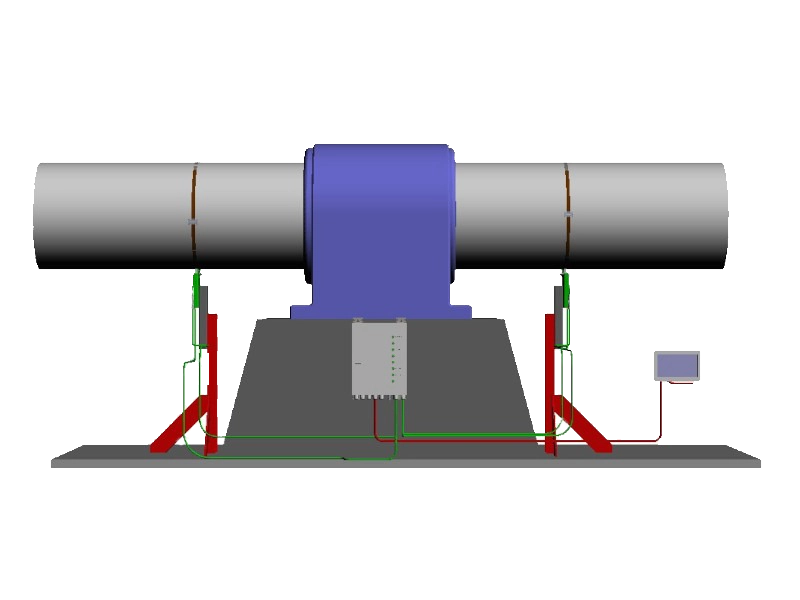
TORXmeter digi komplett
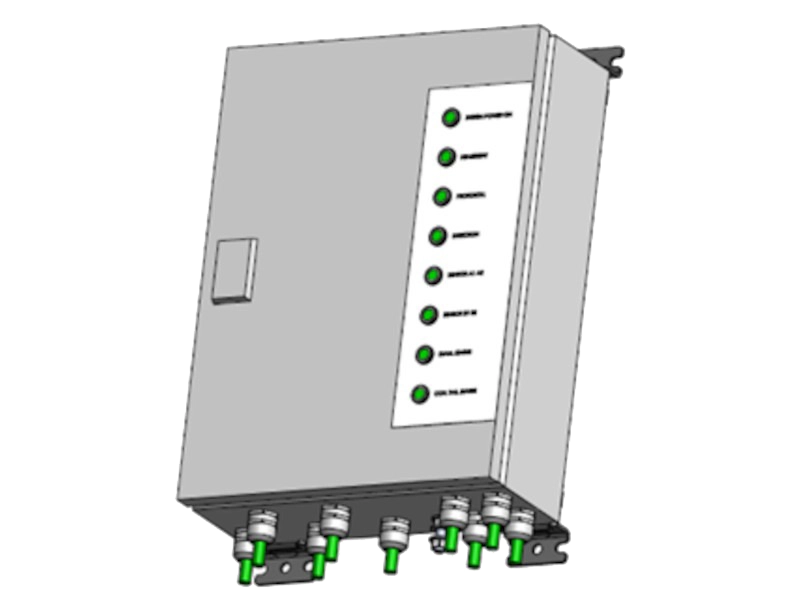
Control unit
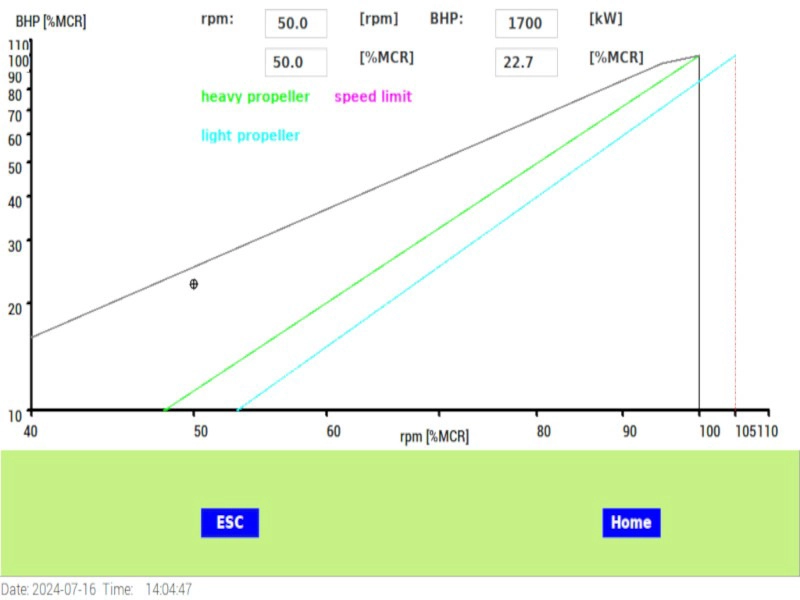
load diagram
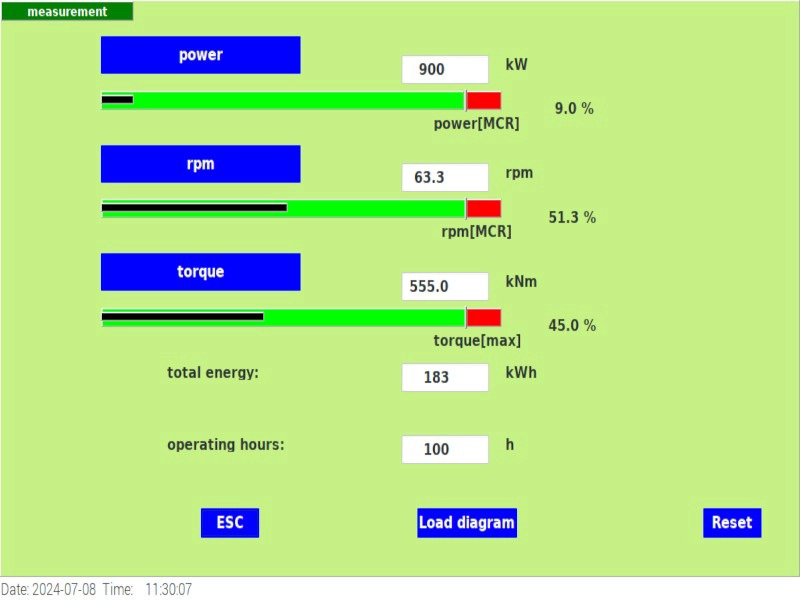
measurement screen
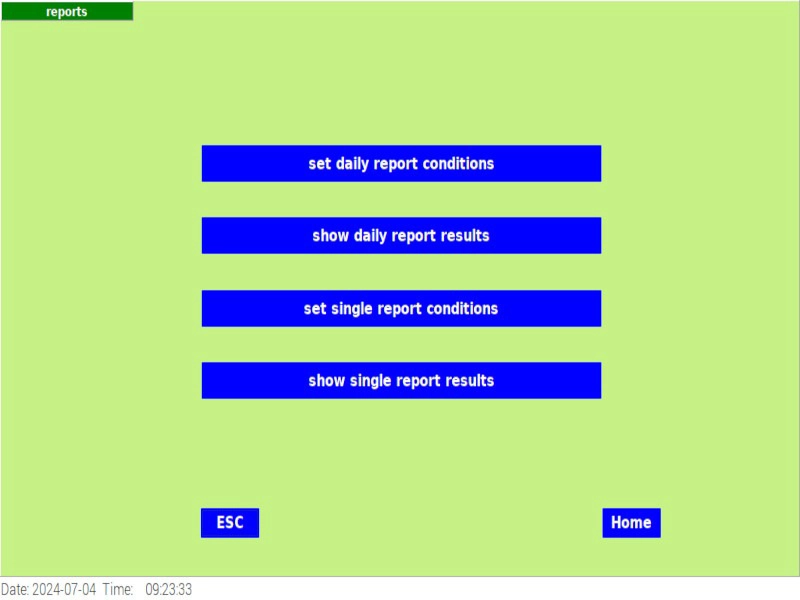
report
Simple Operation
Scope of supply
Technical specification
Two pairs of EXFR sensors, including sensor belts, are installed on the ship’s shaft. The measuring principle enables a high resolution of the overall system through extremely fast (EXFR) magnetic scanning of the magnetic pattern of the sensor belts. The sensors utilise the magnetic pole change and the zero crossing (change in magnetic fields) between the two sensor belts to measure the angle. A local display allows the measured values (torque, speed, and calculated shaft power) to be read directly on the display or output by connecting to an external system (RS485-NMEA protocol).
Control unit with small display inside
A1/A2 Pre-wired cable between the control unit and EXFR sensors (appr. 7,5 m)
B1/B2 Pre-wired cable between the control unit and EXFR sensors (appr. 7,5 m)
2 x welding brackets (the bracket must be welded to the ship’s structure)
2 x sensor holders with pre-mounted 2 x 2 EXFR sensors mkII (A1/A2) (B1/B2)
2 x EXFR sensor belts mkII
PC Software for setup parameter, display of measurement data and calibration (no picture)
“Torsional vibration” viewer of raw data and twist (no picture)
| Sensor accuracy: | <0.1 % (shaft torque, shaft speed, shaft power) <0.1 %+Ke (shaft torque) (Ke means total error of shaft modulus constant and shaft diameter) |
| System accuracy: | <0.1 % (shaft power, shaft speed) Shaft diameter: 200 mm up to 3000 mm |
| Speed range: | up to 1200 rpm |
| Data output: | RS485 NMEA protocol, Alarm output (overload and system error), 4-20mA and Modbus on request |
| Data storage: | Mini SD card |
| Communication: | setup via laptop of all parameters via software and USB port Small color display for setting and displaying measurement data |
| Power outputs: | Output via RS485 (NMEA183) protocol 1/s; baud rate 4800 to 38400 Output for °twist/°crankshaft; resolution <2°; binary 14 bytes |
| Update: | via USB port |
| Options: | Repeater display, ShaPoLi display, fuel display |